What Is Reverse Osmosis?
Reverse osmosis is the technology behind most dedicated drinking-water systems. Here is how it works and where it fits in a home or business.
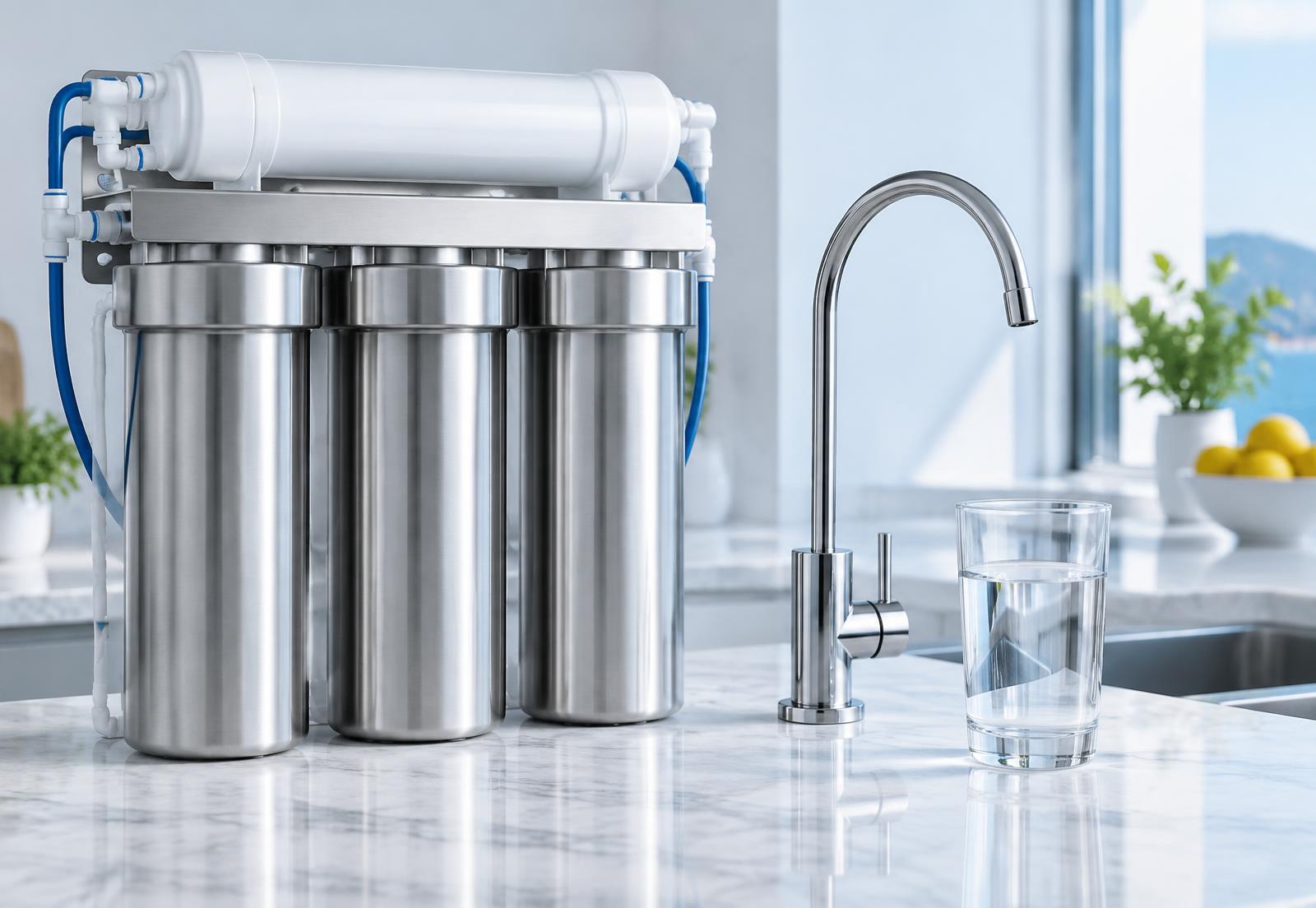
Reverse osmosis, usually shortened to RO, pushes water under pressure against a semi-permeable membrane. Water passes through; a portion of the dissolved material in the water does not and is carried away to drain. Most residential RO systems are point-of-use units installed under a kitchen sink with their own faucet.
The typical stages
- Sediment pre-filtration to protect the membrane from particles.
- Carbon pre-filtration, commonly used ahead of the membrane.
- The RO membrane itself.
- Storage, in systems that use a tank.
- A final polishing filter before the dedicated faucet.
What RO is used for
RO is generally applied where a household or business wants an additional level of treatment specifically for drinking and cooking water: the kitchen tap, a refrigerator or ice maker line, a coffee station, or a break room. Reduction performance varies by contaminant, membrane, water chemistry, pressure, temperature and system condition, so specific claims should always come from the manufacturer's performance data for that model.
No treatment technology removes every contaminant. RO is one tool, usually paired with whole-home treatment that handles hardness, sediment or taste concerns before water reaches the kitchen.
Reject water and recovery
Because RO separates water into a treated stream and a concentrate stream, some water goes to drain. The ratio varies significantly between designs and operating conditions, so ask about the recovery rate of the specific system you are considering rather than assuming a universal figure.
Maintenance
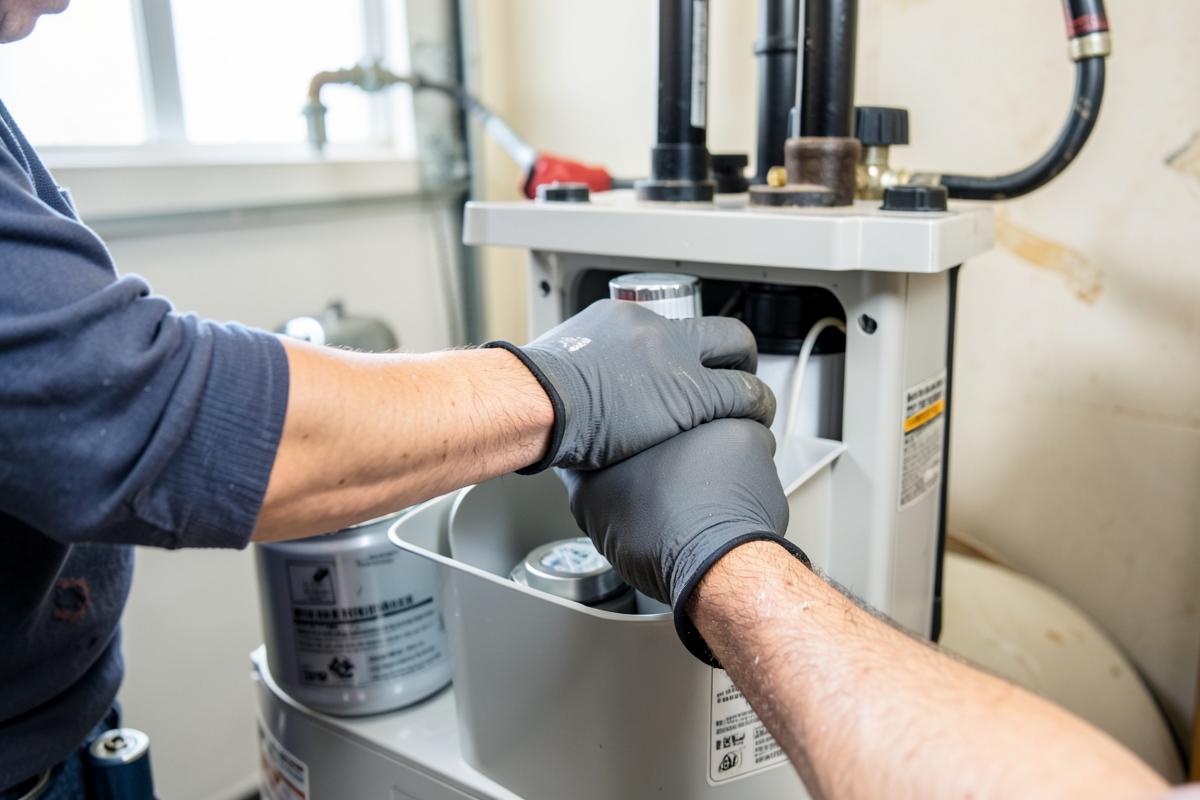
Pre-filters and post-filters are replaced periodically, and the membrane is replaced on a longer interval. Actual intervals depend on the manufacturer's guidance, your water quality and how much water the system produces.
Frequently Asked Questions
Related pages on our site
Want to know whether reverse osmosis is right for your drinking water?
Talk with iContracting Water and start with a water analysis.