
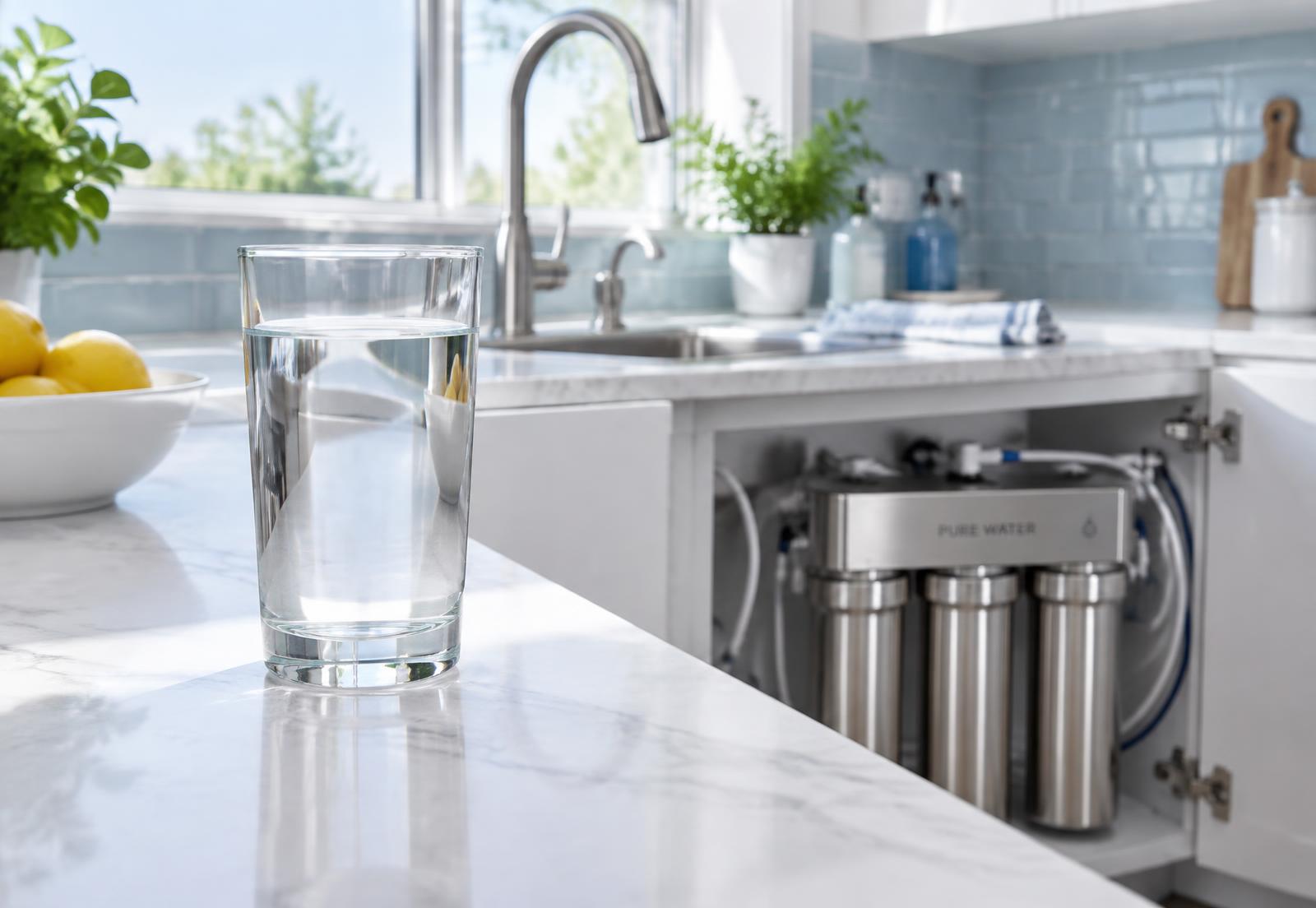
PFAS education & treatment
PFAS Water Filtration & Treatment in Central Florida
Concerned about PFAS in your drinking water? iContracting Water can help you understand your water-quality concerns and explore treatment options designed to reduce PFAS and other contaminants.
Serving Orlando and Central Florida
What Are PFAS?
PFAS stands for per- and polyfluoroalkyl substances. PFAS are a large family of manufactured chemicals that have been used in a wide range of products and industrial applications because of their resistance to heat, water, oil and grease.
You may hear PFAS described as “forever chemicals.” That nickname exists because many PFAS are highly persistent and can remain in the environment for long periods rather than breaking down quickly.
01
Manufacturing
02
Products
03
Environment
04
Water sources
05
Drinking water
This is a general illustration of how PFAS can move through the environment. Not every pathway applies to every location.
Why Are People Talking About PFAS in Drinking Water?
- PFAS monitoring has increased across the United States.
- More water systems are collecting and reporting PFAS data.
- Federal and state agencies are developing and implementing PFAS-related requirements.
- Consumers have greater access to information about local water quality.
- Testing can help determine whether PFAS are present in a specific water source.
How Can PFAS Reach Water?
Industrial Activity
Certain industrial activities have historically used or released PFAS-containing materials.
Firefighting Foams
Certain firefighting foams have contained PFAS.
Manufacturing
PFAS have been used in various manufacturing processes and products.
Consumer Products
Some PFAS have historically been used in products designed to resist water, grease, heat or stains.
Environmental Transport
PFAS can move through soil and groundwater depending on the chemical and environmental conditions.
These are general pathways described by environmental agencies. No specific source should be assumed responsible for PFAS in any particular water supply unless testing confirms it.
Testing Is the First Step
You cannot determine PFAS levels by taste, smell or appearance. A professional laboratory test may be necessary to determine whether specific PFAS compounds are present in a particular water source.
- 01
Test
Determine what is present in the water.
- 02
Understand
Review the results and identify the water-quality concerns.
- 03
Treat
If treatment is appropriate, select a system designed for the specific application.
iContracting Water can help you understand your water-treatment options. Laboratory testing may be necessary to determine whether specific PFAS compounds are present and at what concentrations.
How Can PFAS Be Reduced in Drinking Water?
Activated Carbon
Certain granular activated carbon systems can reduce certain PFAS under appropriate conditions.
Reverse Osmosis
Reverse osmosis can reduce many PFAS compounds and may be appropriate for point-of-use drinking-water applications.
Specialized Filtration
Certain specialized media and treatment technologies may be designed specifically to address PFAS.
Multi-Stage Treatment
Some applications may require more than one treatment technology depending on water quality and treatment goals.
PFAS treatment performance depends on the specific contaminant, concentration, water chemistry, system design, flow rate, contact time, maintenance and other operating conditions. No system should be assumed to remove every PFAS compound.
Whole-Home or Drinking-Water Filtration?
Whole-Home Treatment
Designed to treat water entering the home and can provide treated water throughout the property.
- Kitchen
- Bathrooms
- Showers
- Laundry
- Sinks
- Other water-use locations
Point-of-Use Treatment
Designed to treat water at a specific location, such as a kitchen drinking-water faucet.
- Drinking water
- Cooking
- Coffee
- Food preparation
The best approach depends on your water source, test results, treatment goals, household needs and system design.
PFAS May Not Be the Only Water Concern
Water testing can reveal additional characteristics that may deserve attention. A complete water-quality evaluation can help determine whether PFAS treatment should be part of a broader water-treatment strategy.
- Hard Water
- Chlorine
- Sediment
- Taste & Odor
- Iron
- Mineral Content
- Other Water-Quality Parameters
Local Water Treatment Help in Central Florida
Orlando-Based
Located in Orlando and serving Central Florida.
Authorized Puronics Dealer
iContracting Water is an authorized Puronics dealer.
Water Quality Focus
Solutions selected around actual water-quality concerns and treatment goals.
Professional Installation
Professional installation of selected water-treatment systems.
Customized Solutions
No one-size-fits-all recommendation.
Ongoing Support
Service and support after installation as needed.
Our PFAS Water Treatment Process
- 01
Consultation
Tell us about your water source and concerns.
- 02
Water Testing
Determine what water-quality information is available and what additional testing may be appropriate.
- 03
Review
Understand the results and identify treatment objectives.
- 04
Recommendation
Determine whether PFAS treatment is appropriate and which technology may fit the application.
- 05
Installation
Professionally install the selected treatment system.
- 06
Maintenance
Maintain filters, media, membranes and other components according to manufacturer requirements.
Concerned About PFAS in Your Florida Drinking Water?
Homeowners can take a proactive approach by learning where their water comes from, reviewing the information their utility already publishes, and arranging testing when it makes sense. Understanding the water comes before choosing any equipment.
That applies whether your home is on municipal water or a private well, and whether you're considering whole-home treatment or point-of-use drinking-water treatment. Being on either water source does not mean your water is contaminated — it simply means the right way to know is to look at the data.
Looking for whole-home water treatment? Explore our Residential Water Treatment solutions.
Where to start
- Identify your water source — municipal supply, private well or community well.
- Review the water-quality information available for that source.
- Arrange laboratory testing when specific compounds need to be confirmed.
- Match any treatment to what the results actually show.
PFAS Treatment for Businesses & Facilities
Water-quality questions aren't limited to homes. Offices, restaurants, hospitality properties, commercial buildings, multifamily properties and other facilities may also want to understand their water before selecting treatment.
Know What's in Your Water
If you're concerned about PFAS or other water-quality issues, start with the facts. iContracting Water can help you understand your options and determine the appropriate next step.
iContracting Water7648 Southland Blvd., Suite 100Orlando, FL 32809
PFAS FAQ
PFAS Resources
Sources and further reading from government agencies.
- Florida DEP — PFAS information
State monitoring, regulatory activity and Florida-specific PFAS programs.
- U.S. EPA — PFAS
Federal overview of PFAS, research and drinking-water actions.
- EPA UCMR 5 monitoring data
Nationwide drinking-water sampling that included 29 PFAS; the final UCMR 5 dataset was released in August 2026.
- Florida drinking-water program
Public drinking-water information for Florida systems.
Take the Next Step Toward Better Water
Whether you're concerned about PFAS, hard water, taste and odor, or another water-quality issue, the first step is understanding your water.
iContracting Water7648 Southland Blvd., Suite 100Orlando, FL 32809
Residential water treatmentOffice water treatmentCommercial water treatmentIndustrial water treatmentContact iContracting WaterRefer a friend and earn $250