Whole-House Filtration vs. Point-of-Use Treatment
Should treatment go where water enters the home, or at the tap you drink from? In most projects the answer involves both.

Treatment location is a design decision. Equipment installed where the water service enters the building treats everything downstream. Equipment installed at a single fixture treats only the water going to that fixture. Both have a place, and they solve different problems.
Comparison
| Whole-house | Point-of-use |
|---|---|
| Protects plumbing, fixtures and appliances | Focused on drinking and cooking water |
| Sized to the property's peak flow rate | Sized to a single fixture's demand |
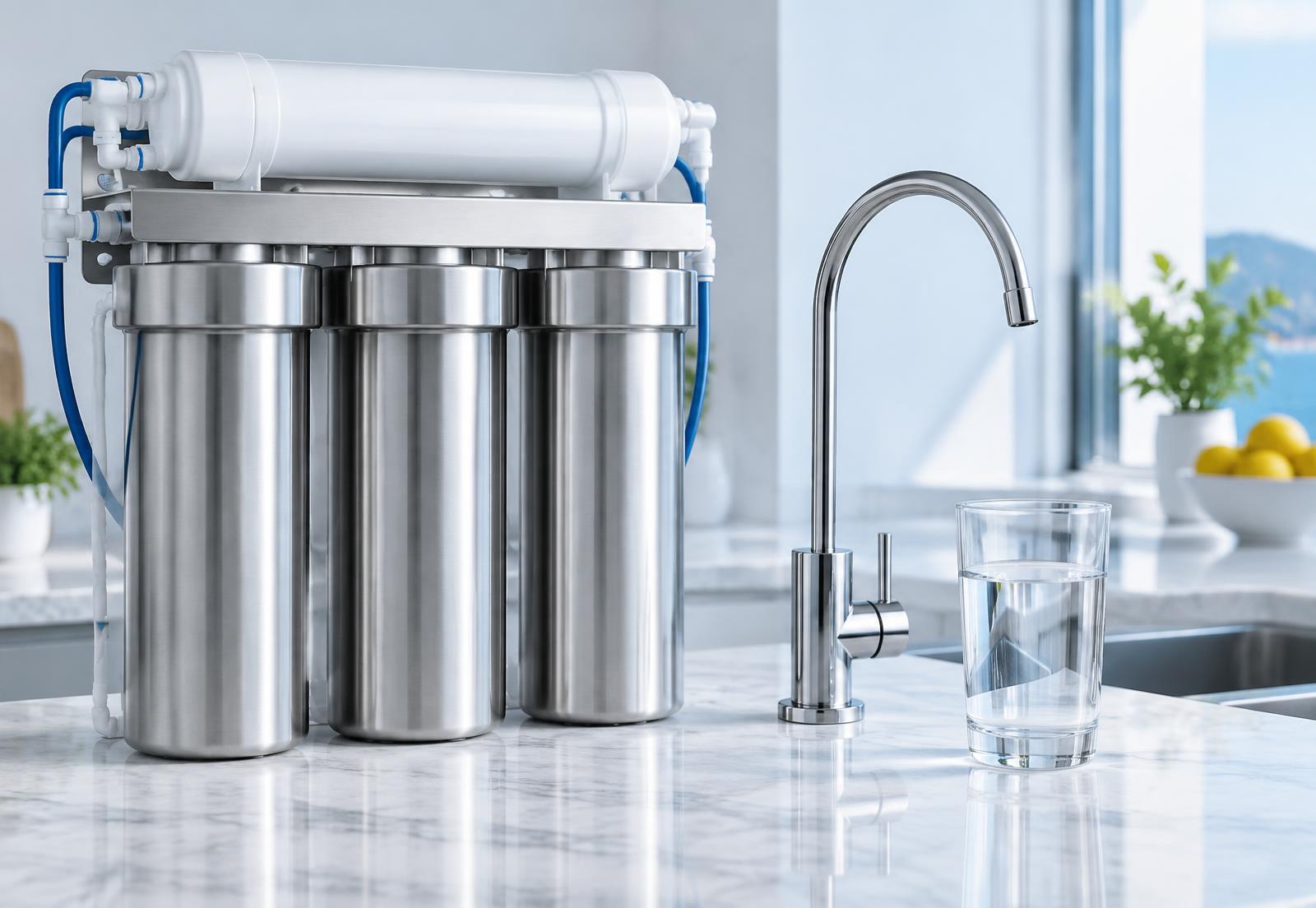
| Typical for sediment, hardness and general filtration | Typical for reverse osmosis and polishing filters |
| Installed at the service entry | Installed under a sink or at a dispenser |
Why most homes use both
Whole-home equipment handles the things that affect the entire property — scale on fixtures, sediment reaching appliances, general filtration. A point-of-use system then adds a focused stage for the water you actually drink. Running the whole house through a drinking-water-grade process is rarely practical or necessary.
Sizing matters as much as technology. An undersized whole-home unit can restrict flow; an oversized one can cost more than the results justify. Both are avoided by measuring flow and testing water before selecting equipment.
Related pages on our site
Not sure where treatment belongs in your home?
We evaluate the water and the plumbing before recommending anything.